Your packaging looks “green” on the outside, but deep down you know it’s more snack villain than eco-hero—and customers can smell the greenwashing faster than last week’s leftover takeout.
Shift to certified sustainable food‑grade materials, clear labeling, and lifecycle assessment backed by UNEP’s food packaging sustainability report to cut waste, meet regulations, and keep both regulators and customers happy.
📦 Defining Sustainable Food Grade Packaging: Standards, Regulations, and Core Requirements
Sustainable food grade packaging must protect food safety, meet legal rules, and lower environmental impact. Brands need clear standards, stable materials, and proven performance across the full supply chain.
It should use safe inks, adhesives, and structures, while also helping recycling or composting. Simple, tested designs often give better results than complex multi-layer packs.
1. Global Food Safety and Compliance Standards
Food packaging must follow strict rules, such as FDA, EU Framework Regulation, and GB standards. These rules limit migration, heavy metals, and unsafe processing aids.
- Migration limits protect taste and health.
- Good Manufacturing Practice reduces risk.
- Traceable raw materials support recalls and audits.
2. Core Functional Requirements for Food Contact
Beyond compliance, packaging must stay strong, clean, and stable under real use. It must protect against light, moisture, oxygen, and handling damage.
- Mechanical strength for filling and transport.
- Heat sealing for tight, leak-free closure.
- Compatibility with hot fill, freezing, or retort.
3. Environmental Criteria and Lifecycle Thinking
Sustainable food grade solutions view impact from raw material to end-of-life. Simple structures and fewer layers usually improve recyclability and carbon footprint.
| Stage | Key Focus |
|---|---|
| Raw material | Renewable, recycled, certified sources |
| Production | Low waste, low energy processes |
| Use | Right-sized packs, low damage rate |
| End-of-life | Recycling, composting, or reuse |
4. Design for Recycling and System Fit
Designers should match packaging to real recycling and collection systems. Clear labels, mono-materials, and easy-to-remove parts support higher recovery rates.
- Avoid mixed materials that are hard to separate.
- Use standard polymers where possible.
- Add clear disposal instructions for consumers.
🌱 Renewable and Recycled Materials for Safe, Long-Term Food Contact Applications
Renewable and recycled packaging must balance safety, strength, and shelf life. Brands can combine paper, bio-based films, and recycled plastics while still meeting strict food contact rules.
Correct barrier design, careful sourcing, and regular testing help keep quality stable in long-term storage, transport, and display conditions.
1. Role of Paper, Board, and Bio-Based Films
Paper and bio-based films support lower fossil use and strong brand stories. When combined with smart barriers, they can safely pack dry foods, snacks, and more.
- Kraft paper adds strength and natural look.
- PLA and other bio-films can offer sealability.
- Coatings improve grease and moisture resistance.
2. Safe Use of Recycled Plastics in Food Packaging
Recycled plastics must come from controlled streams and approved recycling technologies. Decontamination, traceability, and testing keep them safe for food contact.
| Material | Typical Use | Key Control |
|---|---|---|
| rPET | Bottles, trays | Super-clean recycling steps |
| rPE / rPP | Outer layers, non-contact | Separation from food layer |
3. Market Trend Data: Growth of Renewable and Recycled Solutions
Brands are quickly shifting from conventional plastics to renewable and recycled structures. The chart below shows a sample trend of adoption rates over time.
4. Practical Product Examples and Applications
Real products show how renewable and recycled materials work in practice. For example, brands use kraft paper, box-bottom pouches, and mailer bags to cut plastic use.
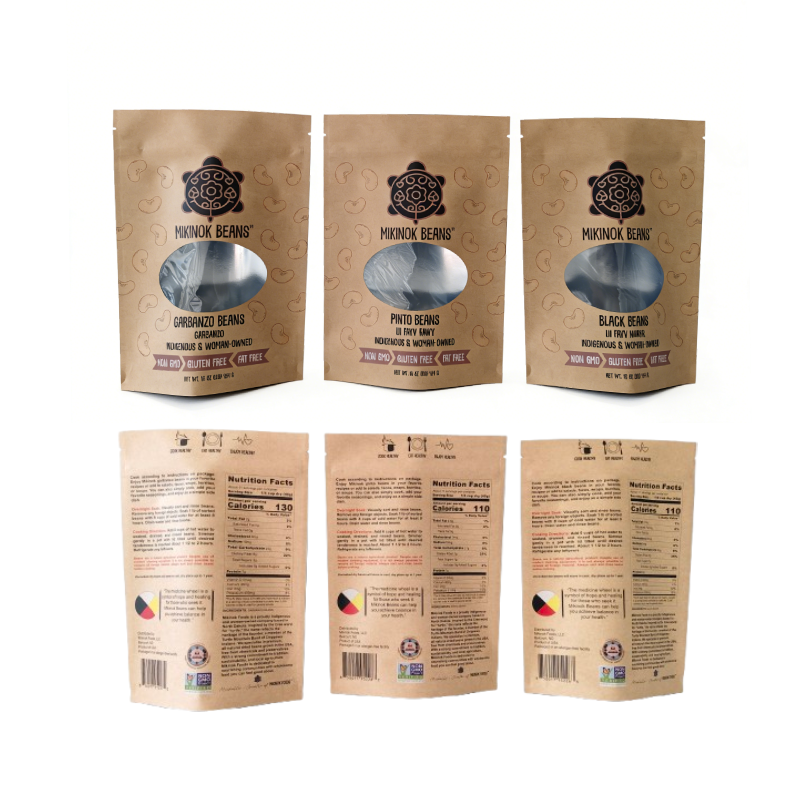
- Custom Kraft paper bag with window With Lower MOQ for snacks, tea, and dry foods.
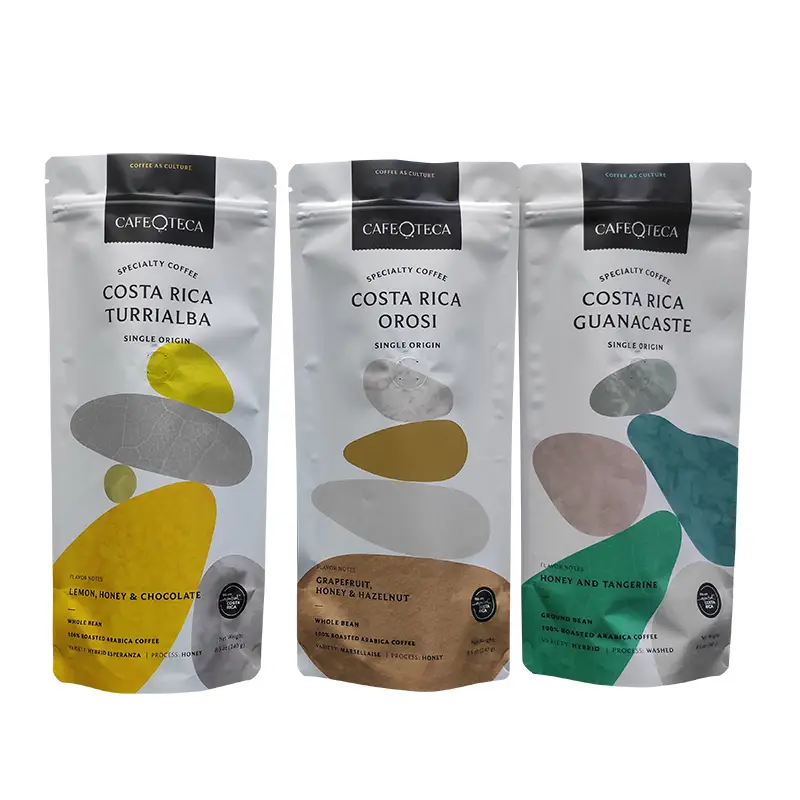
- Custom Box bottom pouch/Flat bottom pouch/8 side sealed bag Manufacturer With Lower MOQ for coffee and premium goods.
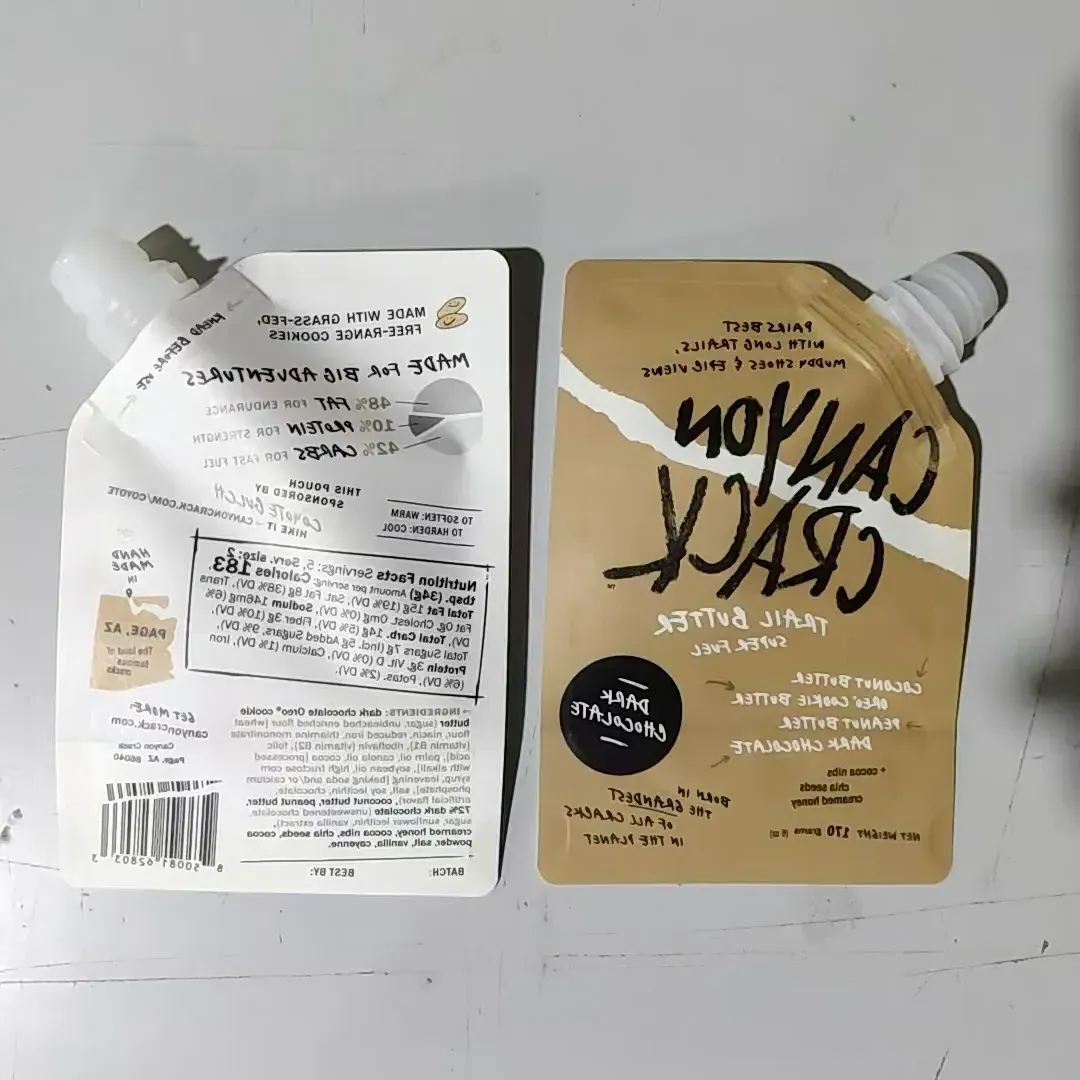
- Custom Mailer bag /Courier bag Manufacturer With Lower MOQ for e‑commerce shipments.
🧪 Barrier Performance, Shelf Life, and Safety Testing in Sustainable Packaging Design
Safe sustainable packaging must still deliver strong barrier, shelf life, and migration safety. Testing under real conditions reduces waste and protects brand trust.
Manufacturers should mix lab tests, pilot runs, and transport trials before full launch.
1. Barrier Properties for Different Food Types
Different foods need different barriers. Coffee needs strong oxygen barriers, snacks need both oxygen and moisture control, and frozen foods need low-temperature toughness.
| Food Type | Key Barrier Need |
|---|---|
| Coffee | Oxygen, aroma retention |
| Chips, nuts | Moisture, oxygen |
| Frozen meals | Low-temperature strength, moisture |
2. Shelf Life Validation and Real-World Simulation
Brands test shelf life by storing samples at target temperatures and humidity. Sensory checks and package integrity checks support label dates and reduce complaints.
- Accelerated aging at higher temperature.
- Real-time storage in standard conditions.
- Drop, vibration, and compression tests.
3. Migration, Organoleptic, and Safety Testing
Migration tests ensure inks, adhesives, and coatings stay within safe limits. Organoleptic tests check that packaging does not change taste or smell of the food.
- Overall and specific migration checks.
- Heavy metals and NIAS screening.
- Panel tasting for odor and flavor impact.
🔄 Circular Economy Strategies: Reuse, Recycling Systems, and Compostable Packaging Pathways
Circular food grade packaging keeps materials in use for longer and cuts waste. Design choices must match local recycling and composting systems.
Brands should focus on simple structures, clear labeling, and real recovery paths, not just claims.
1. Reuse and Refill Systems
Refill and return models work best for stable, local flows. They need strong packs, cleaning steps, and simple consumer journeys.
- Deposit return for containers and crates.
- In-store refill for dry goods and coffee beans.
- Durable pouches for closed-loop systems.
2. Designing for High-Quality Recycling
Recyclable design means more than just using plastic or paper. Structures must be easy to sort, shred, wash, and remelt at scale.
| Design Choice | Recycling Impact |
|---|---|
| Mono-material films | Higher recovery and quality |
| Light inks | Less contamination |
| Removable labels | Easier washing |
3. Compostable Packaging and Its Best Uses
Compostable packs work best for food service, produce, and items with high food residue. They should meet recognized standards and be clearly labeled.
- Use certified compostable materials only.
- Match packs to real composting access.
- Avoid confusing “biodegradable” claims.
🏭 Implementation Roadmap: How KB Packaging Supports Scalable Sustainable Packaging Transitions
Moving to sustainable food grade packaging needs clear steps, testing, and flexible partners. KB Packaging helps brands move from pilots to full-scale rollouts.
Support covers material choice, custom structure design, printing, and continuous improvement based on data.
1. Assessment, Target Setting, and Material Strategy
KB Packaging starts with a review of current formats, waste, and cost. Together with clients, they set carbon, recyclability, and performance goals.
- Portfolio mapping by product and channel.
- Risk and opportunity analysis.
- Defined roadmap by priority SKU.
2. Prototyping, Testing, and Certification Support
New structures go through lab testing, line trials, and transport checks. KB Packaging works with certified labs to support food contact and safety approvals.
| Step | Outcome |
|---|---|
| Lab barrier tests | Data on shelf life potential |
| Pilot packing | Seal and machinability feedback |
| Certification | Proof of compliance and safety |
3. Scaling, Optimization, and Ongoing Innovation
After launch, KB Packaging tracks supply stability, print quality, and complaint data. They refine structures, thickness, and formats to keep improving cost and impact.
- Regular performance reviews.
- Material updates as recycling systems evolve.
- New designs for emerging regulations.
Conclusion
Sustainable food grade packaging blends safety, function, and lower impact. Brands must follow strict rules, real recycling limits, and clear design principles.
By working with expert partners like KB Packaging, companies can scale practical solutions, protect food, and support circular systems without risking quality or brand trust.
Frequently Asked Questions about Food Grade Packaging
1. What makes packaging “food grade”?
Packaging is food grade when it uses approved materials, passes migration tests, and follows Good Manufacturing Practice. It must not transfer harmful levels of substances into the food.
2. Can sustainable packaging still give long shelf life?
Yes. With the right barrier layers, seal design, and testing, paper-based or recycled-content structures can match or even improve shelf life for many products.
3. Are compostable food packages always better than recyclable ones?
Not always. Compostables work best where composting is available and food waste is high. In many markets, well-designed recyclable packs offer a clearer, higher-impact solution.
4. How can a brand start switching to sustainable packaging?
Begin with a portfolio review, then pilot key SKUs with new materials. Test barrier, machinability, and consumer response before scaling across your full range.